
History of algebra
The stories behind the theorems: Cardano's stolen cubic, the word algebra, Galois's last night, Gauss and the 17-gon, Broom Bridge, and Emmy Noether.
Articles
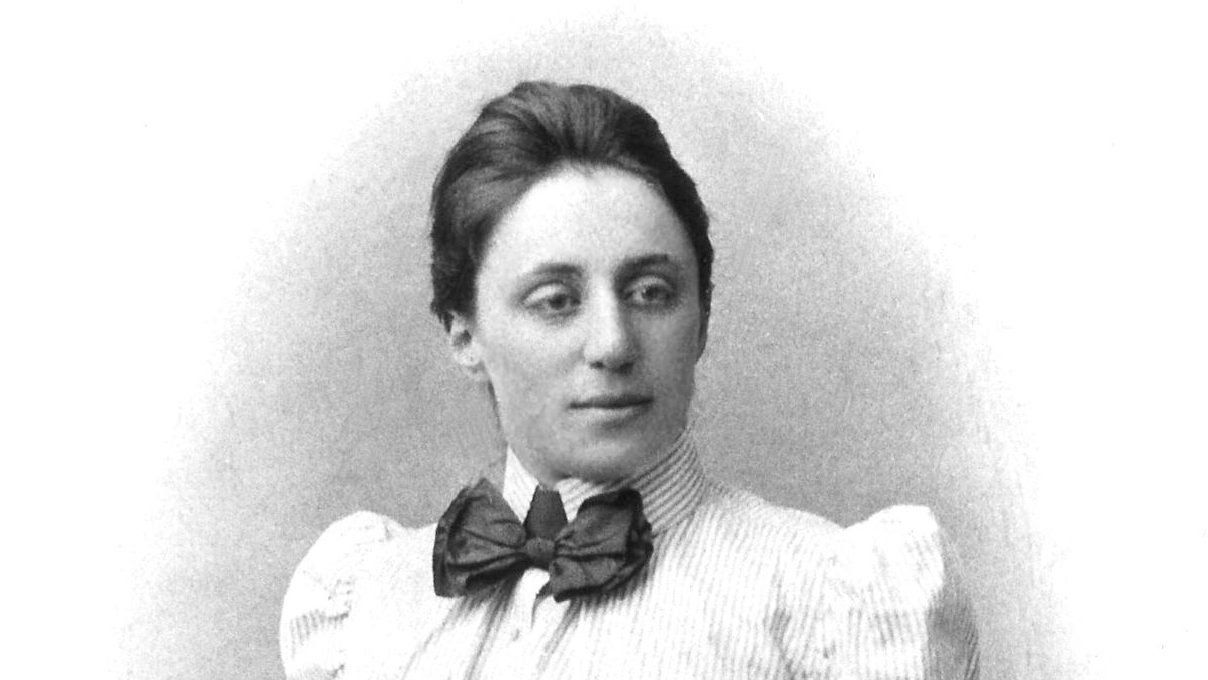
Emmy Noether and the algebra of structure
She was refused a lectureship because she was a woman, taught under a man's name, and in 1921 wrote the paper that turned algebra from the study of equations into the study of structures. Physicists know her for a different theorem altogether.
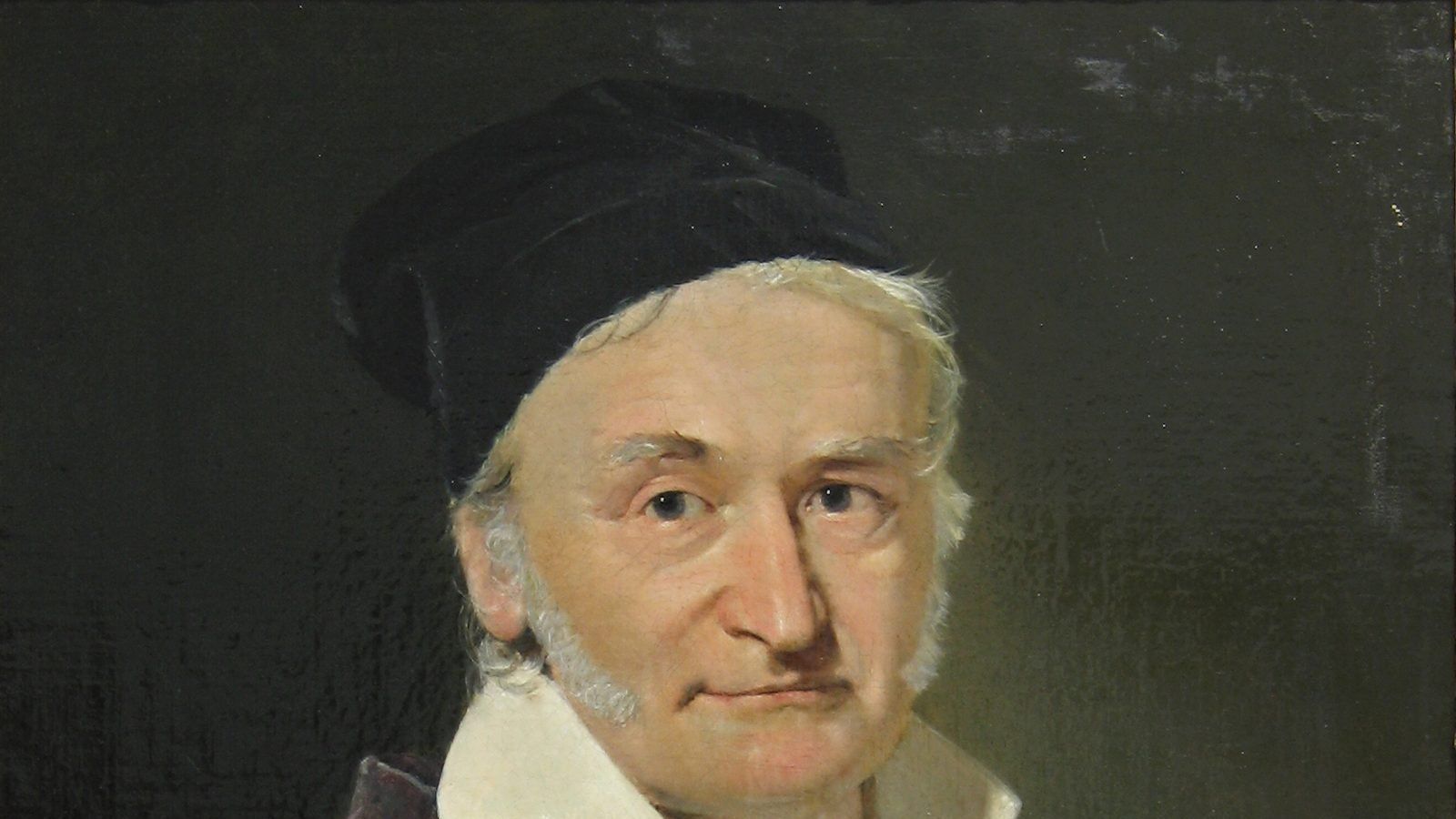
Gauss and the 17-gon
On 30 March 1796 a nineteen-year-old in Göttingen found that a regular polygon with 17 sides can be drawn with ruler and compass, the first such discovery since the Greeks. It decided his career, and the reason it works is a fact about the number 16.
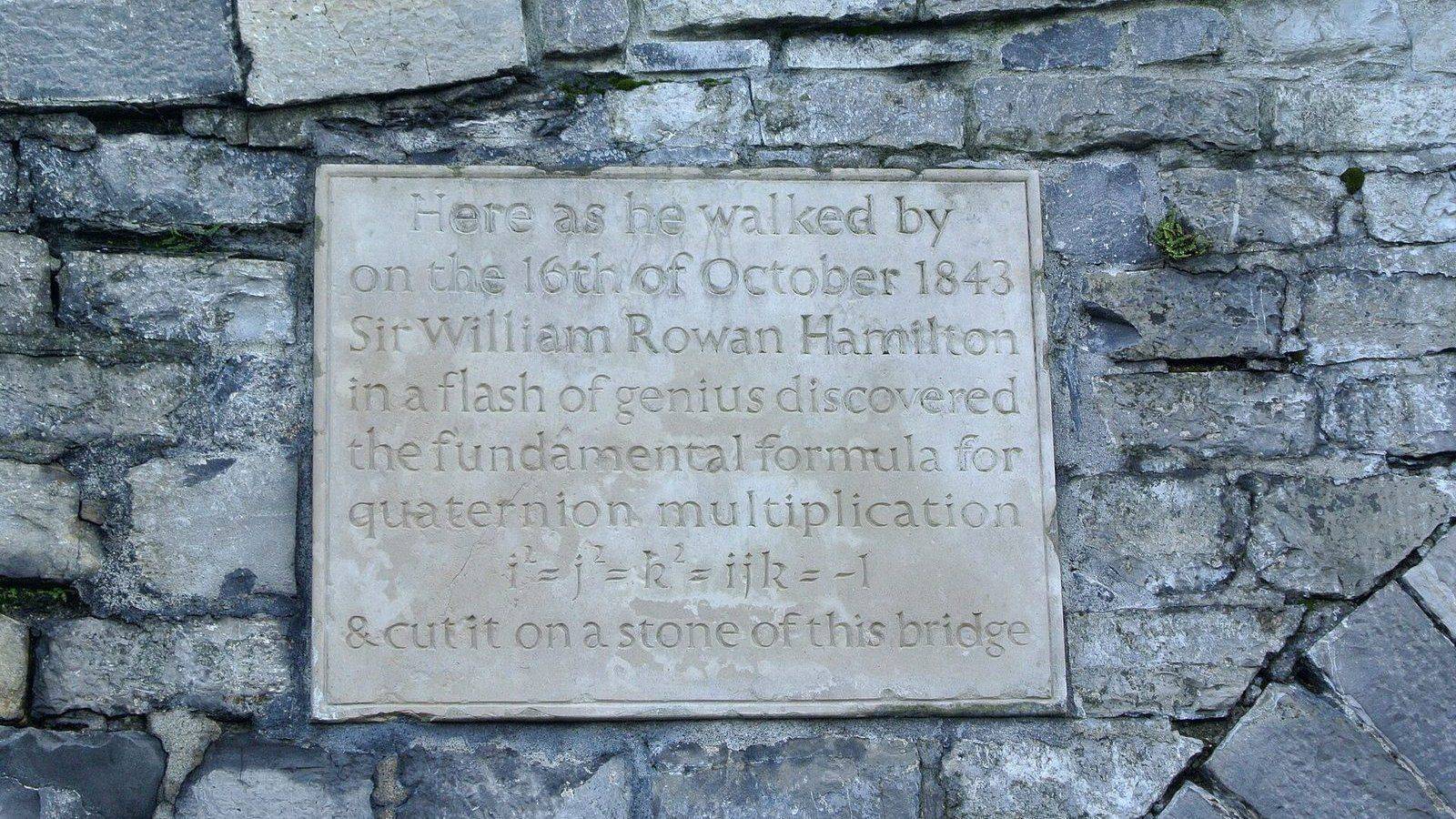
Hamilton on Broom Bridge
On 16 October 1843 William Rowan Hamilton, walking along a Dublin canal, found a way to multiply quadruples of numbers, and scratched the rule into the stone of a bridge. It was the first number system in which the order of multiplication mattered, and spacecraft turn by it today.
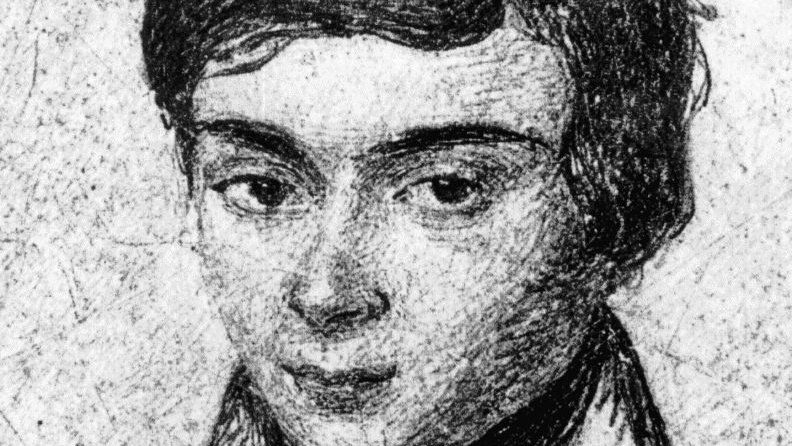
Galois's last night
On 29 May 1832 a twenty-year-old in Paris wrote a letter summarizing the mathematics he had not been able to publish, and the next morning he was shot in a duel. The letter contains the idea of a normal subgroup. What it does not contain is most of the legend.
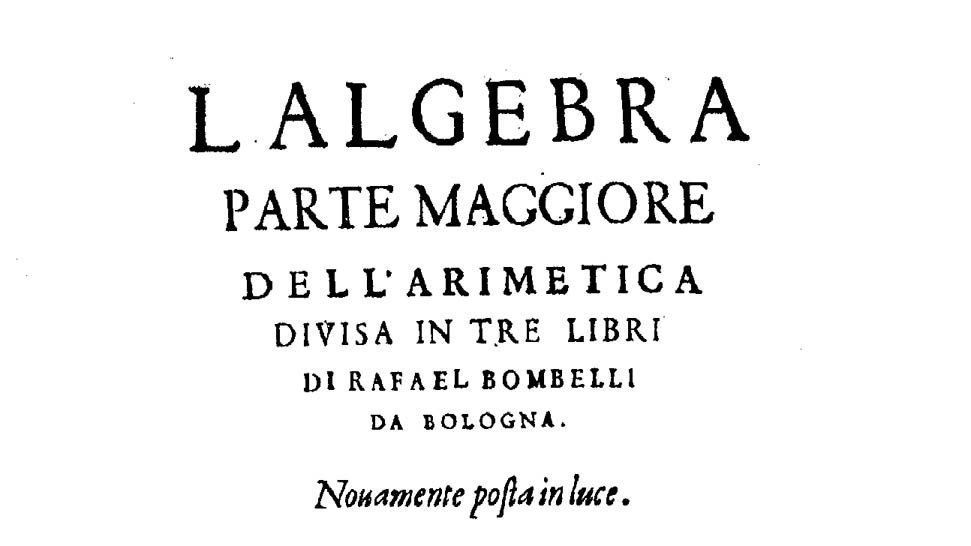
The square root of minus one, forced on us by a cubic
Complex numbers were not invented to solve x^2 + 1 = 0. Nobody wanted a root of that. They were accepted because a cubic with three perfectly real roots refused to give them up any other way, and an engineer from Bologna did the calculation in 1572.
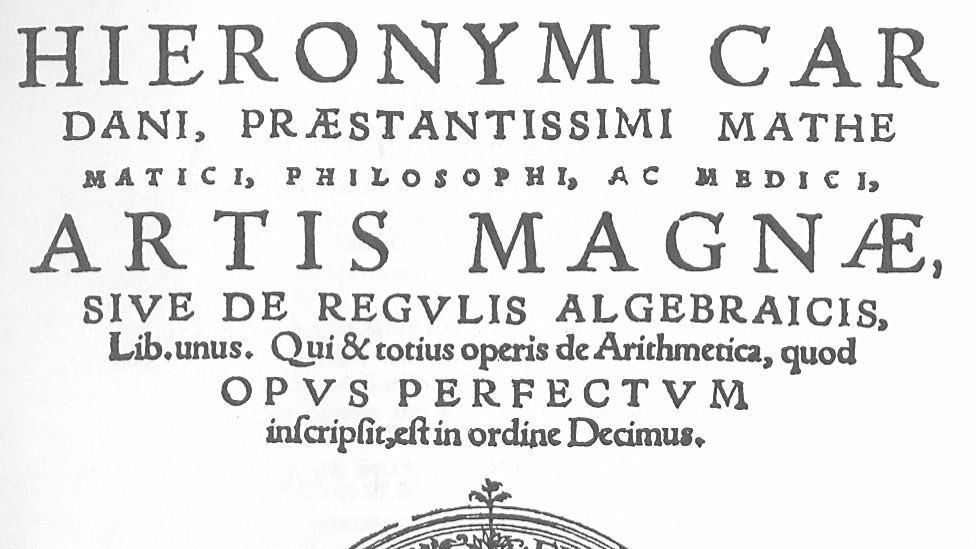
How Cardano solved the cubic, and what he had to steal
The formula for the cubic equation was discovered twice in secret, extracted under oath, and printed in 1545 by a man who had sworn not to. Here is the story, the formula, and the equation x^3 + 6x = 20 worked through.
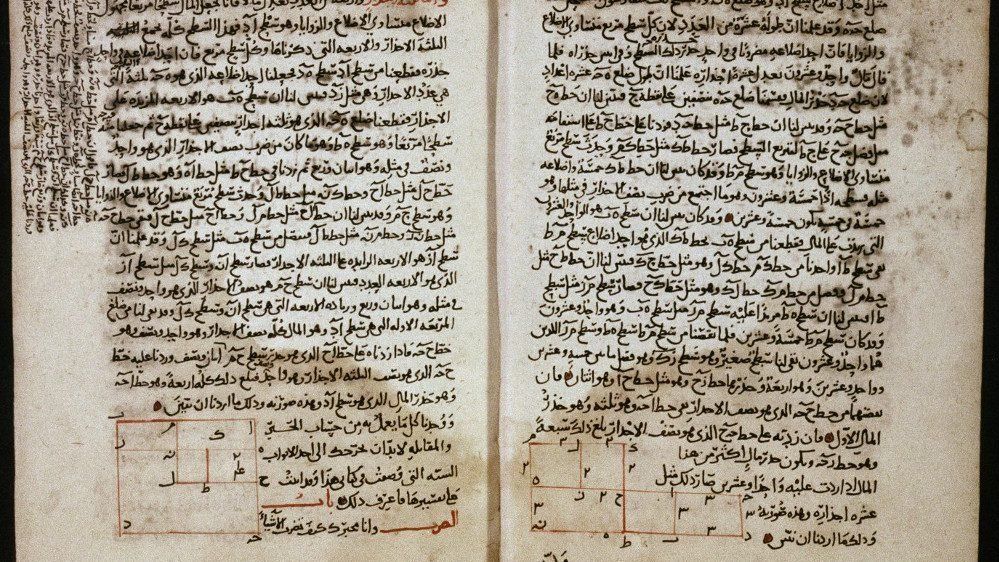
Where the word algebra comes from
Algebra is an Arabic word, al-jabr, and it named one of the two moves in a book written in Baghdad around 820. The book had no x, no equals sign, and no negative numbers, and it still set the subject on its way.
In the masterclass
The Algebraist's Toolkit
Notation, sets and functions, proof, and the laws of arithmetic
Polynomials and Their Roots
Division, the factor theorem, Viète's formulas, and the cubic
Complex Numbers
From Bombelli's square root of a negative number to the fundamental theorem of algebra
The Birth of Modern Algebra
From the search for a formula to the study of structure
Field Extensions and Impossible Constructions
Degrees, the tower law, and what ruler and compass cannot do