
Equations
From the completed square to the quintic with no formula: how equations are solved, why complex numbers were needed, and what ruler and compass cannot do.
Articles

Why you cannot trisect an angle with ruler and compass
Bisecting an angle with ruler and compass takes three arcs. Trisecting one is impossible, and the proof is a short argument about the degree of a cubic equation, published in 1837 by a 23-year-old engineer whom almost nobody noticed.
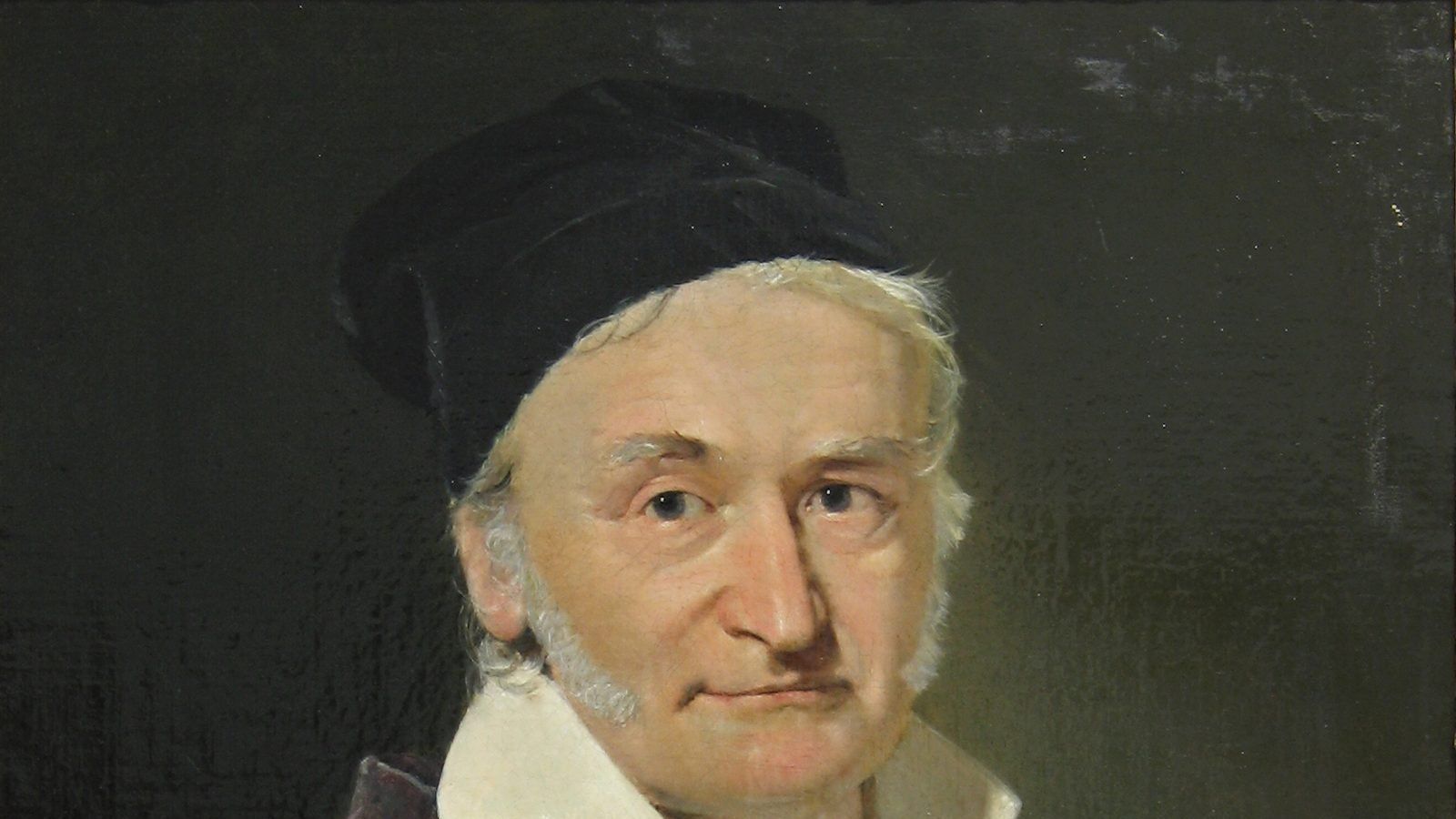
Gauss and the 17-gon
On 30 March 1796 a nineteen-year-old in Göttingen found that a regular polygon with 17 sides can be drawn with ruler and compass, the first such discovery since the Greeks. It decided his career, and the reason it works is a fact about the number 16.
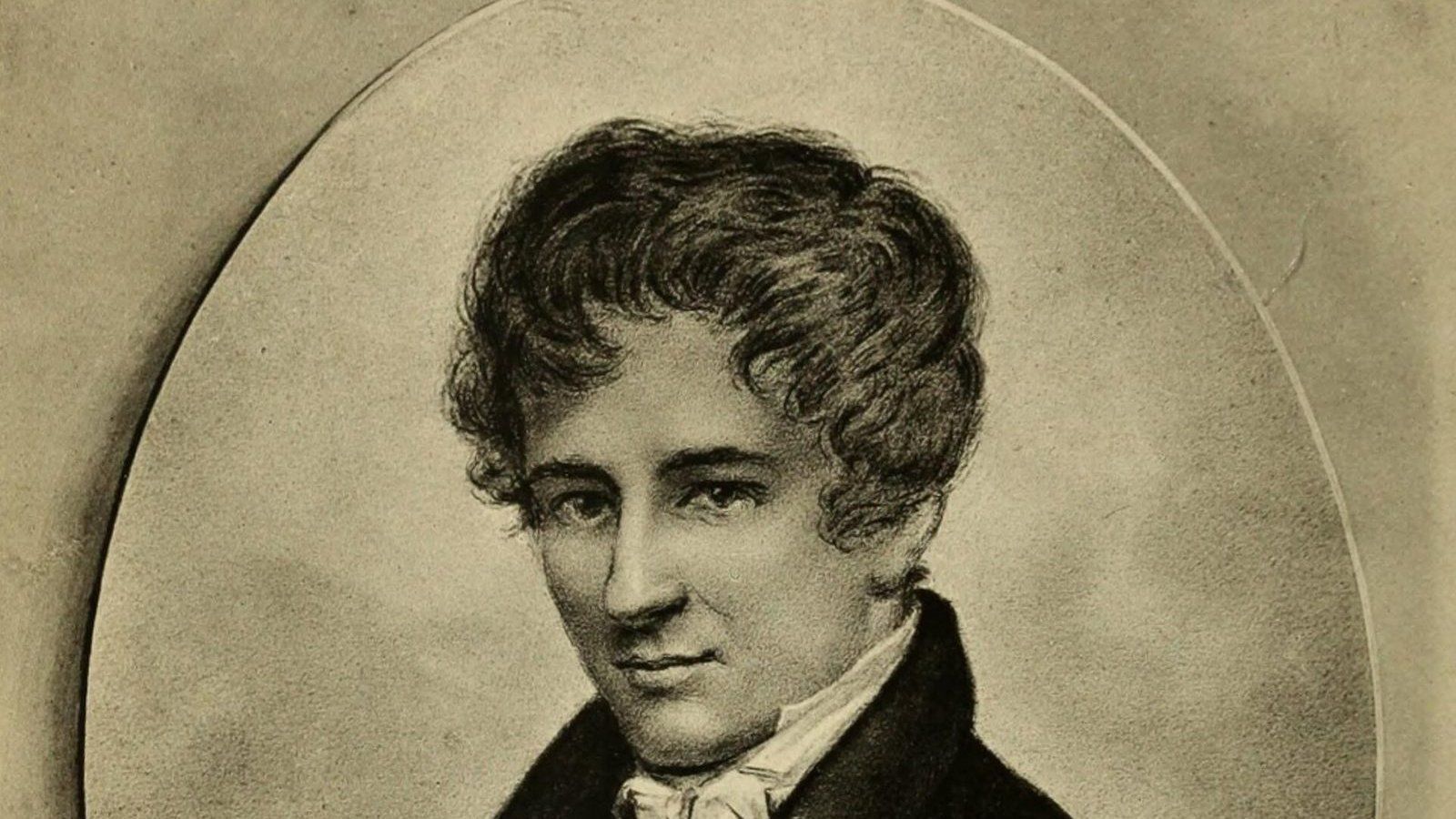
Why there is no formula for the quintic
There is a formula for the roots of a quadratic, one for the cubic, and one for the quartic. For degree 5 there is none, and never will be. This is a theorem, proved in 1824, and the reason is a property of the group of 120 rearrangements of five objects.
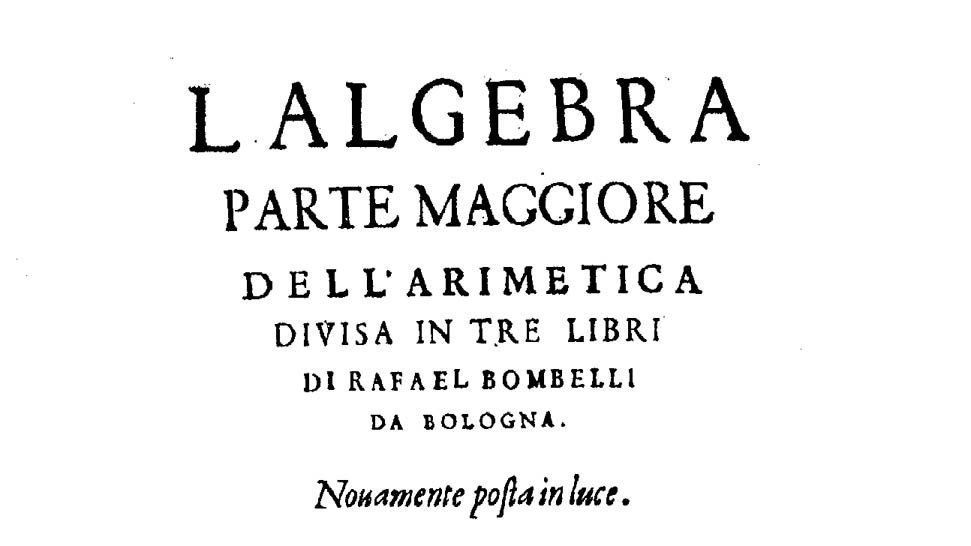
The square root of minus one, forced on us by a cubic
Complex numbers were not invented to solve x^2 + 1 = 0. Nobody wanted a root of that. They were accepted because a cubic with three perfectly real roots refused to give them up any other way, and an engineer from Bologna did the calculation in 1572.
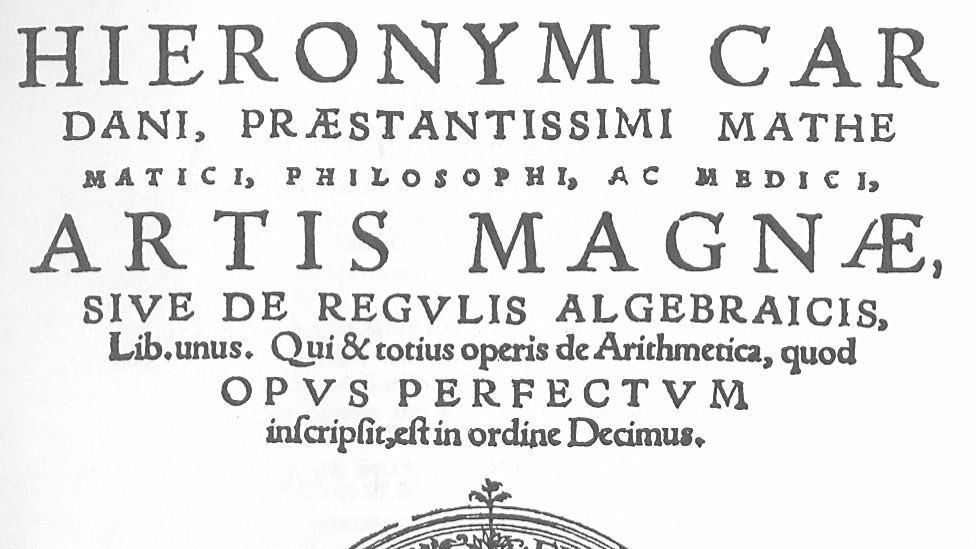
How Cardano solved the cubic, and what he had to steal
The formula for the cubic equation was discovered twice in secret, extracted under oath, and printed in 1545 by a man who had sworn not to. Here is the story, the formula, and the equation x^3 + 6x = 20 worked through.
In the masterclass
Polynomials and Their Roots
Division, the factor theorem, Viète's formulas, and the cubic
Complex Numbers
From Bombelli's square root of a negative number to the fundamental theorem of algebra
The Birth of Modern Algebra
From the search for a formula to the study of structure
Field Extensions and Impossible Constructions
Degrees, the tower law, and what ruler and compass cannot do
Galois Groups
Automorphisms, splitting fields, and the fundamental theorem of Galois theory
Solvable Groups and the Quintic
Why the general equation of degree five has no formula in radicals
The Inverse Galois Problem
Which finite groups are Galois groups over the rationals?