
Algebra Masterclass Blog
Explanations, background, and advice for curious students.
Latest articles
How to prepare for the algebra problems of the IMO
Algebra is one of the four areas of the International Mathematical Olympiad, and its problems look nothing like school algebra. Here is what the syllabus actually contains, which theorems you need, where the theory in this masterclass helps and where it does not, and how to practise.
The Monster group and moonshine
The largest of the 26 sporadic simple groups has about 8 times 10^53 elements and was built by hand in 1980. Its smallest representation has dimension 196,883, and a function from the theory of elliptic curves has the coefficient 196,884. The coincidence turned out to be a theorem.
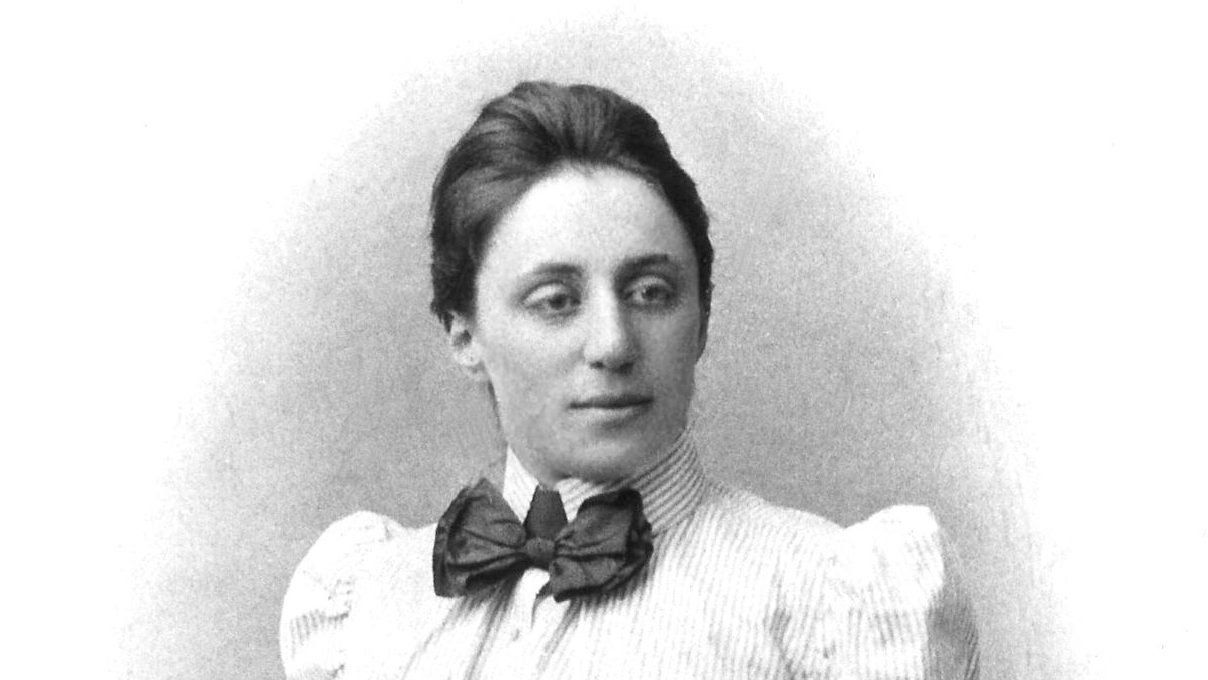
Emmy Noether and the algebra of structure
She was refused a lectureship because she was a woman, taught under a man's name, and in 1921 wrote the paper that turned algebra from the study of equations into the study of structures. Physicists know her for a different theorem altogether.
How fast can two matrices be multiplied?
The school method for multiplying two n by n matrices takes about n^3 operations, and for 60 years everyone assumed that was the best possible. In 1969 Volker Strassen showed it was not, and the question of the true exponent is open, with the record standing at 2.371339.
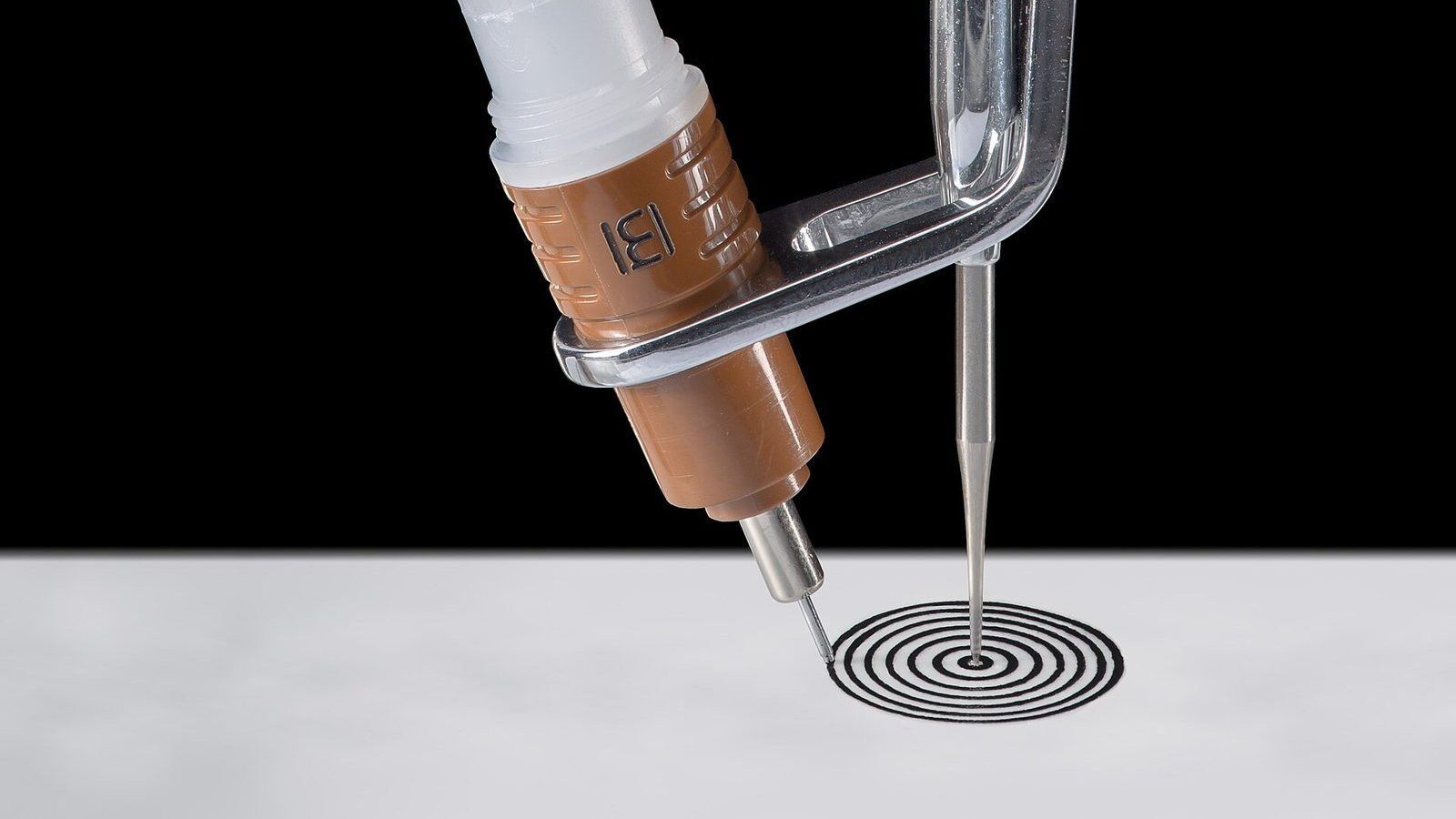
Why you cannot trisect an angle with ruler and compass
Bisecting an angle with ruler and compass takes three arcs. Trisecting one is impossible, and the proof is a short argument about the degree of a cubic equation, published in 1837 by a 23-year-old engineer whom almost nobody noticed.
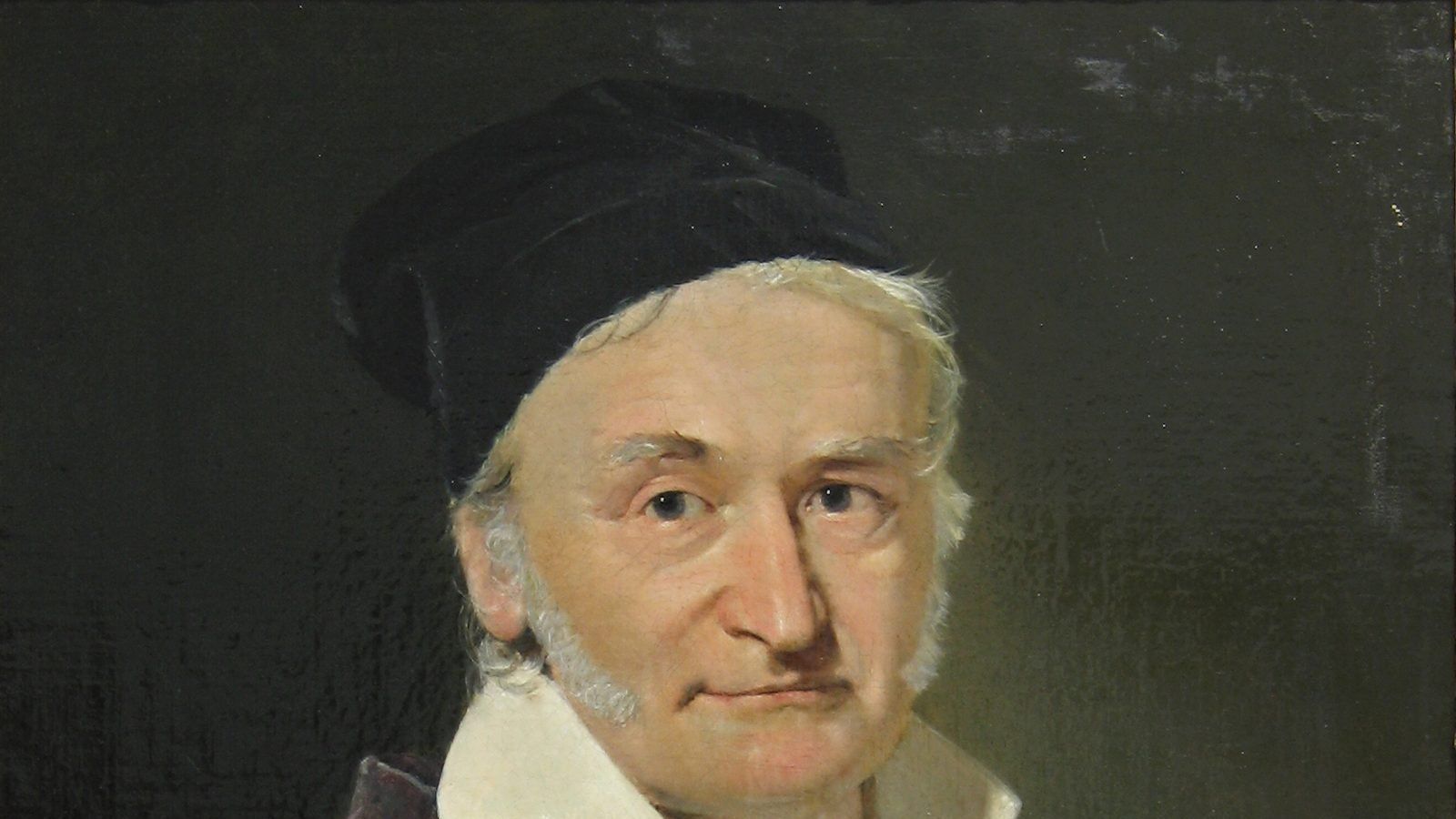
Gauss and the 17-gon
On 30 March 1796 a nineteen-year-old in Göttingen found that a regular polygon with 17 sides can be drawn with ruler and compass, the first such discovery since the Greeks. It decided his career, and the reason it works is a fact about the number 16.
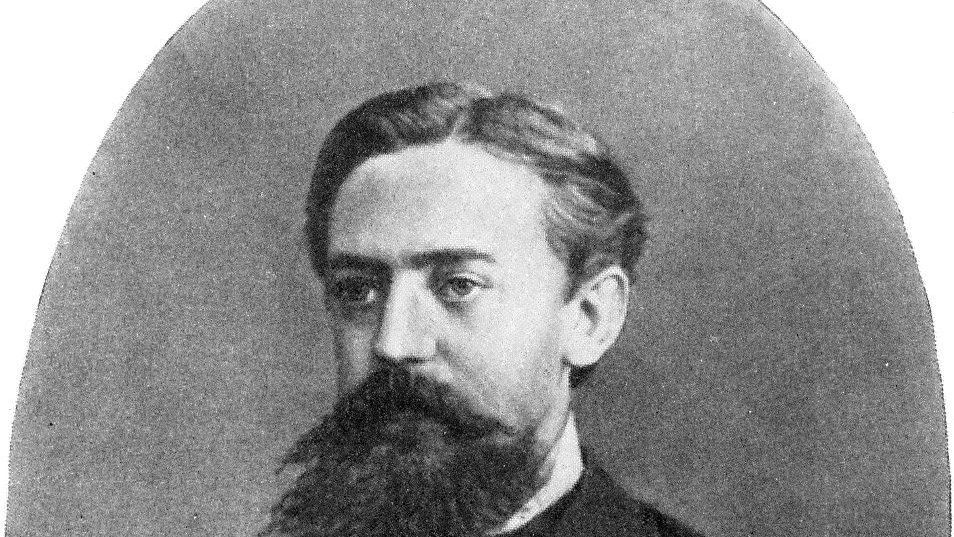
What an eigenvector is, and why Google wanted one
A matrix turns most vectors. The few directions it does not turn are its eigenvectors, and finding them explains the Fibonacci numbers, the long-run weather of a Markov chain, and the ranking of web pages that built a company.

Counting necklaces with Burnside's lemma
How many different necklaces can be made from six beads in two colours? Not 64, because turning a necklace does not make a new one. The right answer is 14, and the tool that finds it, Burnside's lemma, counts anything up to symmetry, from painted cubes to chemical isomers.
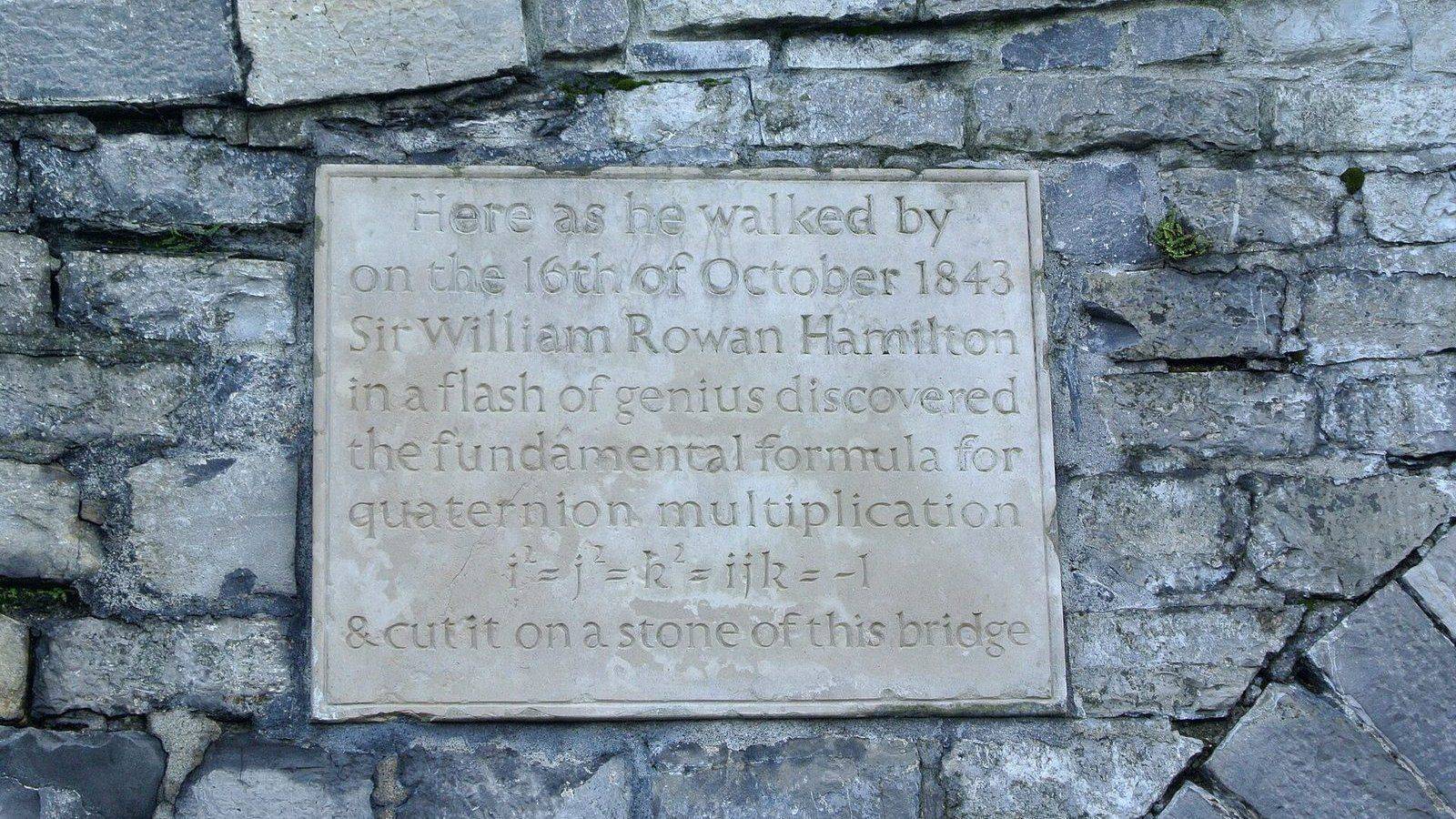
Hamilton on Broom Bridge
On 16 October 1843 William Rowan Hamilton, walking along a Dublin canal, found a way to multiply quadruples of numbers, and scratched the rule into the stone of a bridge. It was the first number system in which the order of multiplication mattered, and spacecraft turn by it today.